

Buildings account for approximately 37% of global energy-related carbon emissions when operational and construction-related emissions are combined, based on findings from the United Nations Environment Programme (UNEP) and the Global Alliance for Buildings and Construction. As homeowners and designers look for ways to improve sustainability, outdoor structures that enhance comfort while reducing reliance on mechanical cooling have become an important part of residential planning.
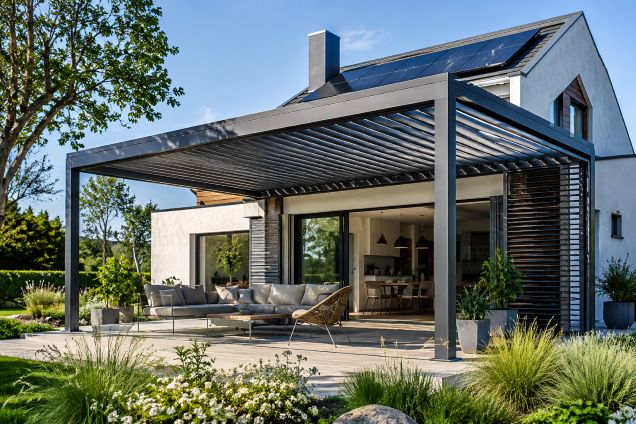
Among these structures, adjustable shading systems have gained attention for their ability to regulate sunlight, improve outdoor usability, and contribute to passive climate control. Researching the price of bioclimatic pergolas (cijena bioklimatskih pergola) can help illustrate how design choices, materials, and technological features affect investment levels. Yet the discussion extends beyond cost alone. Questions surrounding durability, environmental impact, maintenance requirements, and long-term performance often shape purchasing decisions just as strongly.
Comparing Material Choices in Outdoor Structures
One side of the discussion focuses on material selection. Different materials offer distinct advantages and limitations, making them a major factor in outdoor structural investment.
Aluminum has become a common choice for modern outdoor installations because of its corrosion resistance and relatively low maintenance requirements. Data from the Aluminum Association indicates that aluminum is highly recyclable and can retain its properties through repeated recycling processes. This characteristic aligns well with sustainability goals.
Wood, by contrast, is often valued for its natural appearance and renewable origins. Experts from the Forest Stewardship Council (FSC) note that responsibly sourced timber can contribute to sustainable construction practices. However, wood generally requires more frequent maintenance, including sealing, staining, or treatment against moisture and insects.
Steel offers another perspective. It is known for structural strength and longevity, especially in demanding climates. Yet steel components may require protective coatings to prevent corrosion, and production processes can involve higher embodied carbon compared with some alternative materials.
The debate between these materials highlights a central challenge. Sustainable housing decisions rarely depend on a single environmental metric. Durability, maintenance frequency, recyclability, and local climate conditions all influence which material represents the most responsible long-term choice.
Automation Features and Their Influence on Value
Another factor frequently discussed is automation. Modern outdoor structures increasingly incorporate motorized systems that adjust louvers, shading panels, or ventilation openings in response to weather conditions.
Supporters of automation argue that these technologies improve functionality and user comfort. Automated shading can reduce solar heat gain during hot periods while allowing sunlight penetration during cooler conditions. Research published by the International Energy Agency (IEA) suggests that effective solar shading strategies can contribute to reduced cooling demand in residential buildings.
Critics, however, point to increased complexity. Automated systems typically require sensors, electrical components, control units, and periodic servicing. These additions can raise initial investment costs and introduce future maintenance considerations.
From a sustainability perspective, the question becomes whether enhanced performance offsets the environmental footprint associated with additional technology. In many cases, the answer depends on usage patterns, local climate conditions, and the lifespan of installed components.
Durability as a Long-Term Investment Factor
Durability represents one of the most significant variables affecting outdoor structural decisions. A structure that lasts several decades with minimal intervention may ultimately have a lower environmental impact than a less expensive alternative requiring frequent replacement.
The National Institute of Standards and Technology (NIST) emphasizes the importance of life-cycle assessment when evaluating building materials and systems. Life-cycle thinking considers extraction, manufacturing, maintenance, operation, and end-of-life disposal rather than focusing solely on upfront expenditures.
In practical terms, homeowners often compare warranties, expected service life, resistance to weather exposure, and maintenance schedules. Coastal environments, regions with high rainfall, and areas experiencing significant temperature fluctuations can place additional demands on outdoor structures.
As a result, durability frequently becomes a key contributor when assessing the price of bioclimatic pergolas and similar installations. Materials and engineering approaches designed to withstand decades of environmental exposure generally require greater initial investment but may reduce long-term resource consumption.
Environmental Trade-Offs and Resource Efficiency
The environmental argument surrounding outdoor structures is rarely straightforward. One perspective emphasizes reducing energy demand through passive cooling and shading strategies. Another highlights the environmental cost associated with manufacturing construction materials and technological components.
The Intergovernmental Panel on Climate Change (IPCC) notes that passive design measures play a meaningful role in lowering building energy consumption. Outdoor shading systems can support this goal by limiting heat accumulation around residential spaces.
At the same time, sustainability assessments increasingly examine embodied carbon. Embodied carbon refers to greenhouse gas emissions generated during material extraction, manufacturing, transportation, and installation.
A highly durable aluminum structure may require substantial energy during production, yet its longevity and recyclability can offset some environmental impacts over time. Conversely, sustainably harvested timber may begin with a lower carbon footprint but require more maintenance-related resources throughout its lifespan.
These contrasting viewpoints illustrate why environmental performance cannot be measured using a single indicator. Effective decision-making requires balancing operational benefits against material-related impacts.
Maintenance Considerations and Lifecycle Costs
Maintenance often receives less attention than initial purchase costs, yet it can significantly influence overall value. Outdoor structures are continuously exposed to sunlight, moisture, wind, and temperature fluctuations.
Wooden systems may require periodic refinishing to maintain appearance and performance. Steel structures may need inspections and protective coating maintenance. Aluminum systems generally demand less intervention but can still require cleaning and occasional hardware replacement.
Automation introduces additional considerations. Motors, sensors, and electronic controls may need updates or repairs during the structure’s operational life. While these systems can improve performance, they also create additional maintenance responsibilities.
Analysts studying sustainable housing frequently emphasize total cost of ownership rather than upfront expenditure alone. This broader perspective includes maintenance, repair, replacement cycles, and energy-related benefits over many years.
READ ALSO: Revolutionizing Energy Efficiency | The Latest Breakthroughs in Closed Cell Spray Foam Insulation
Balancing Investment Priorities in Sustainable Housing
The discussion surrounding outdoor structural investment reflects a broader challenge within sustainable housing. Every design decision involves balancing competing priorities. Durability may increase upfront costs but reduce long-term resource consumption. Automation may improve comfort and energy efficiency while introducing technological complexity. Material selection may influence aesthetics, maintenance requirements, and environmental performance in different ways.
A dialectical approach reveals that no single material or feature universally represents the best solution. Local climate conditions, homeowner priorities, expected lifespan, maintenance capabilities, and environmental objectives all influence outcomes.
As sustainable housing continues to evolve, outdoor structures will remain an important component of passive design strategies. Understanding how materials, automation features, and durability factors interact provides a more complete framework for evaluating investment decisions. Rather than focusing solely on purchase price, long-term environmental performance and lifecycle value offer a more meaningful basis for comparison and responsible residential planning.