

The United States Environmental Protection Agency (EPA) notes that integrated approaches to pest management can reduce unnecessary pesticide use while still maintaining effective pest control. This shift reflects a broader change in environmental thinking. Pest management is increasingly moving away from relying heavily on routine chemical applications and toward more targeted methods designed to reduce ecological impact.
Discussions around localized treatment methods also reflect this trend. Information shared through professional bed bug treatment in Buffalo as a source illustrates how pest management services increasingly combine inspection, monitoring, heat-based methods, and selective treatment practices rather than depending solely on broad chemical applications.
Environmental responsibility has become part of many industries, and pest management is no exception. Questions surrounding chemical exposure, effects on wildlife, water contamination, and long-term ecological impact have influenced both public opinion and industry practices. Modern pest control methods are being compared more closely against older approaches to determine whether meaningful environmental improvements are taking place.
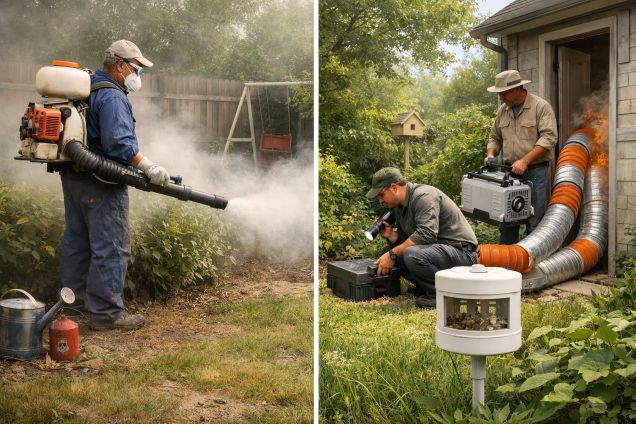
Eco-Conscious Pest Management Is Gaining Attention
Pest control historically focused on immediate elimination. Fast results often mattered more than environmental consequences. Over time, researchers, environmental agencies, and public health organizations began examining how extensive chemical use could affect ecosystems.
The World Health Organization (WHO) has highlighted that improper pesticide use can create risks for both human health and environmental systems. Studies have also explored concerns involving pesticide residues entering soil and water systems.
Modern environmental awareness has encouraged industries to evaluate alternatives. Consumers increasingly ask questions about treatment methods, application frequency, and possible environmental effects before selecting pest management services.
This does not necessarily mean chemicals have disappeared from pest control. Instead, many discussions focus on whether modern systems use them more carefully and more selectively.
Traditional Versus Modern Pest Control Methods
The contrast between traditional and modern practices provides a clearer picture of how environmental priorities have changed.
Traditional Pest Control Approaches
- Broad-spectrum pesticide applications
- Routine scheduled spraying regardless of pest activity
- Limited monitoring before treatment
- Less emphasis on prevention strategies
- Greater reliance on chemical intervention
Older methods often focused primarily on eliminating pests as quickly as possible. Chemical treatments frequently covered large areas even when infestations affected smaller spaces.
While these approaches often succeeded in reducing pest populations, environmental concerns eventually emerged. Research from The National Pesticide Information Center (NPIC) indicates that some pesticides may affect non-target organisms, including beneficial insects, birds, and aquatic life.
Modern Pest Control Approaches
- Monitoring and inspection before treatment
- Targeted application methods
- Integrated Pest Management principles
- Heat treatments and non-chemical options
- Preventive environmental adjustments
Modern systems often begin with identifying the source of a problem rather than immediately applying products. Professionals may evaluate moisture conditions, entry points, sanitation issues, and structural factors contributing to pest activity.
Heat treatment methods, sealing gaps, habitat reduction, and monitoring devices increasingly appear alongside selective treatment options.
Environmental Concerns Around Chemical Usage
Chemical pesticides continue to raise environmental questions even as newer products become more targeted.
Several concerns commonly appear in environmental discussions:
- Potential contamination of water systems
- Impact on pollinators and beneficial insects
- Development of pesticide resistance
- Residue accumulation in surrounding environments
- Effects on soil ecosystems
The United States Geological Survey (USGS) has conducted studies showing that pesticide compounds may be detected in streams and waterways under certain conditions. Environmental impact varies depending on application methods, weather patterns, chemical composition, and frequency of use.
Pollinator health has become another important issue. Bees and other beneficial species play essential roles within ecosystems. Research from organizations such as The Xerces Society for Invertebrate Conservation has encouraged reducing unnecessary exposure whenever possible.
These concerns have created pressure to improve pest management practices without sacrificing effectiveness.
Emerging Low-Impact Strategies
Modern pest management increasingly emphasizes reducing environmental disturbance while maintaining practical results.
Integrated Pest Management
Integrated Pest Management, commonly called IPM, combines multiple strategies rather than relying on a single solution.
The EPA describes IPM as an approach that uses monitoring, prevention, biological methods, and selective treatments only when necessary.
Examples include:
- Identifying pest entry points
- Reducing food and water sources
- Improving sanitation practices
- Using traps and monitoring devices
- Applying pesticides only when thresholds are met
This system attempts to reduce overall chemical dependence while addressing pest activity efficiently.
Heat-Based Treatments
Heat treatment technology has become more common for certain pest situations, particularly for bed bug management.
Heat raises temperatures to levels that pests cannot survive. Since this process may reduce reliance on chemical applications in specific cases, discussions about environmentally conscious pest management often include heat-based methods.
However, effectiveness varies depending on the pest species and treatment conditions.
Biological Controls
Biological control methods use natural predators, pathogens, or organisms to manage pest populations.
Agricultural systems frequently use these strategies. Beneficial insects, microbial agents, and naturally occurring biological controls may reduce the need for extensive pesticide use.
Research supported by The Food and Agriculture Organization of the United Nations (FAO) has explored how biological approaches can contribute to sustainable agricultural practices.
READ ALSO: Greener Living Trends | The Shift Toward Eco-Friendly Cockroach Control Solutions
Are Modern Practices Truly More Environmentally Responsible?
The answer appears more complex than a simple yes or no.
Modern pest management practices generally show greater awareness of environmental impact compared with many traditional approaches. More attention is placed on prevention, monitoring, selective application, and reducing unnecessary exposure.
At the same time, environmental responsibility depends heavily on how methods are applied. A low-impact product used excessively may still create environmental concerns. A treatment designed to reduce chemical exposure may require additional energy or resources.
Current trends suggest that the industry is moving toward balancing effectiveness with environmental considerations rather than eliminating chemicals entirely.
Conversations surrounding environmentally conscious pest control, targeted extermination methods, bed bug management approaches, and selective treatment systems will likely continue evolving as research advances. Environmental responsibility may ultimately depend less on individual products and more on thoughtful decision-making throughout the entire pest management process.