

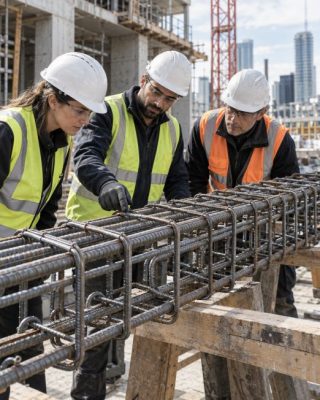
 Concrete buildings can develop cracks, corrosion, and structural damage when reinforcement is poorly designed or installed. Some cracks are expected, but excessive cracking can expose steel to moisture and other harmful substances. Repairs may require additional concrete, steel, labour, and energy. Severe deterioration can eventually lead to the replacement of structural components, creating construction waste that could have been avoided.
Reinforcing steel helps concrete resist forces that could otherwise cause serious damage. Components such as rebar stirrups and ligatures hold reinforcing bars in position and provide additional strength to beams, columns, and other structural elements. Their size, shape, spacing, and placement influence how well a structure performs throughout its lifespan. Five practical considerations show why these relatively small components matter for building durability and material efficiency.
1. Correct Spacing Helps Prevent Structural Cracks
Concrete performs well under compression but needs steel reinforcement to handle tensile forces. Beams also experience shear forces, which can produce diagonal cracks near their supports. Transverse steel helps resist these forces and limits the development of damaging cracks.
Research published by the American Concrete Institute shows that the distribution of shear reinforcement influences the strength of concrete members. Tests have demonstrated that reinforcement can become less effective when the distance between its legs increases excessively.
For example, a concrete beam supporting an upper floor may need closer reinforcement near its supports. Installing ties at the specified intervals helps the beam resist the expected loads. Incorrect spacing can reduce its designed capacity and create problems that require costly structural repairs.
Following the approved structural drawings reduces these risks. It also helps prevent the unnecessary removal and replacement of concrete caused by reinforcement errors discovered during construction.
2. Accurate Bends Keep Reinforcement Working as Intended
The shape of a reinforcing tie matters as much as its position. Properly formed bends and hooks help anchor the steel within the concrete. This allows the reinforcement to perform its intended structural function when loads are applied.
The American Concrete Institute explains that hooked reinforcement requires suitable anchorage and confinement. Its research and technical guidance demonstrate why hook geometry and placement are important to structural performance.
Consider a reinforced concrete column with rectangular ligatures. If the hooks are incorrectly formed or positioned, the ties may provide less confinement than the structural design requires.
Accurate fabrication reduces the chance of these problems. Checking dimensions, bend angles, and hook details before installation also helps prevent unusable steel pieces from reaching the construction site.
Fabricators should follow the approved reinforcement schedule rather than making adjustments based on convenience. This supports consistent quality and reduces avoidable material waste.
3. Crack Control Can Reduce the Need for Early Repairs
Concrete naturally develops some cracks as it shrinks, responds to temperature changes, or carries structural loads. Reinforcement helps control cracking, although it cannot eliminate every crack or guarantee that moisture will never reach the steel.
Studies published by the American Concrete Institute show that corrosion can cause reinforcing steel to expand. This creates pressure within the surrounding concrete and may eventually lead to cracking and damage to the protective cover.
For example, a concrete beam exposed to repeated moisture may develop corrosion-related damage if water and harmful substances reach its reinforcement. Suitable concrete cover, good concrete quality, and correctly installed steel help reduce this risk.
Transverse reinforcement contributes by controlling shear-related cracking and supporting the intended structural behaviour of the member.
However, durability also depends on drainage, concrete quality, exposure conditions, and maintenance. Reinforcing ties should therefore be considered one part of a wider approach to preventing premature deterioration.
4. Proper Column Confinement Supports Long-Term Structural Performance
Concrete columns carry loads from the floors and structural elements above them. Closed ligatures help restrain the main reinforcing bars and confine the concrete core, improving the column’s ability to resist deformation under demanding conditions.
Research reported by the American Concrete Institute demonstrates that transverse reinforcement can improve the strength and ductility of reinforced concrete columns. The effectiveness of this reinforcement depends on its configuration and anchorage.
For example, a column in a multistorey building may experience substantial forces during an earthquake. Properly detailed ties help maintain confinement and support the structural response anticipated by the engineer.
This can reduce the risk of severe damage, although actual performance depends on the entire structural system, material quality, and earthquake intensity.
When structural components remain serviceable for their intended lifespan, building owners can avoid some of the material consumption associated with major reconstruction or premature replacement.
5. Accurate Reinforcement Planning Reduces Material Waste
Reinforcement detailing affects construction efficiency before concrete is poured. Accurate cutting schedules, fabrication, and placement help ensure that steel components fit their intended locations without unnecessary modification.
For example, incorrectly sized ligatures may need to be rejected and replaced. Poorly positioned reinforcement may also require correction before concrete placement, increasing labour requirements and potentially generating additional steel offcuts.
The environmental importance of avoiding construction waste becomes clearer when considering the wider building industry. The United States Environmental Protection Agency estimated that construction and demolition activities generated approximately 600 million tons of debris in the United States in 2018. Concrete was among the materials included in that estimate.
Reducing construction waste also means considering how building materials and structural components affect long-term costs. When planning sustainable housing investments, builders and property owners should consider material durability, maintenance requirements, and the potential need for future repairs. Accurate reinforcement detailing supports these goals by helping concrete structures achieve their intended service life while reducing avoidable material consumption.
Correct reinforcement detailing helps address waste at two stages. During construction, it reduces avoidable fabrication and installation errors. Throughout a building’s service life, reliable structural performance can help limit the need for premature repairs or replacement.
Neither benefit happens automatically. Engineers, fabricators, and construction teams must coordinate their work and check that the installed reinforcement meets the approved design.
Building Durability Starts With the Details
Small reinforcement components have an important role in concrete construction. Their spacing, bends, anchorage, and placement affect structural strength, crack control, and the ability of reinforced concrete to perform as designed.
For builders and property owners, careful reinforcement planning is a practical way to support long-term durability and more efficient material use. It works alongside suitable concrete quality, protective cover, drainage, inspection, and maintenance.
As construction projects place greater emphasis on resource efficiency, reducing preventable structural damage will remain important. Getting reinforcement details right from the beginning helps buildings make better use of the materials already invested in them.